
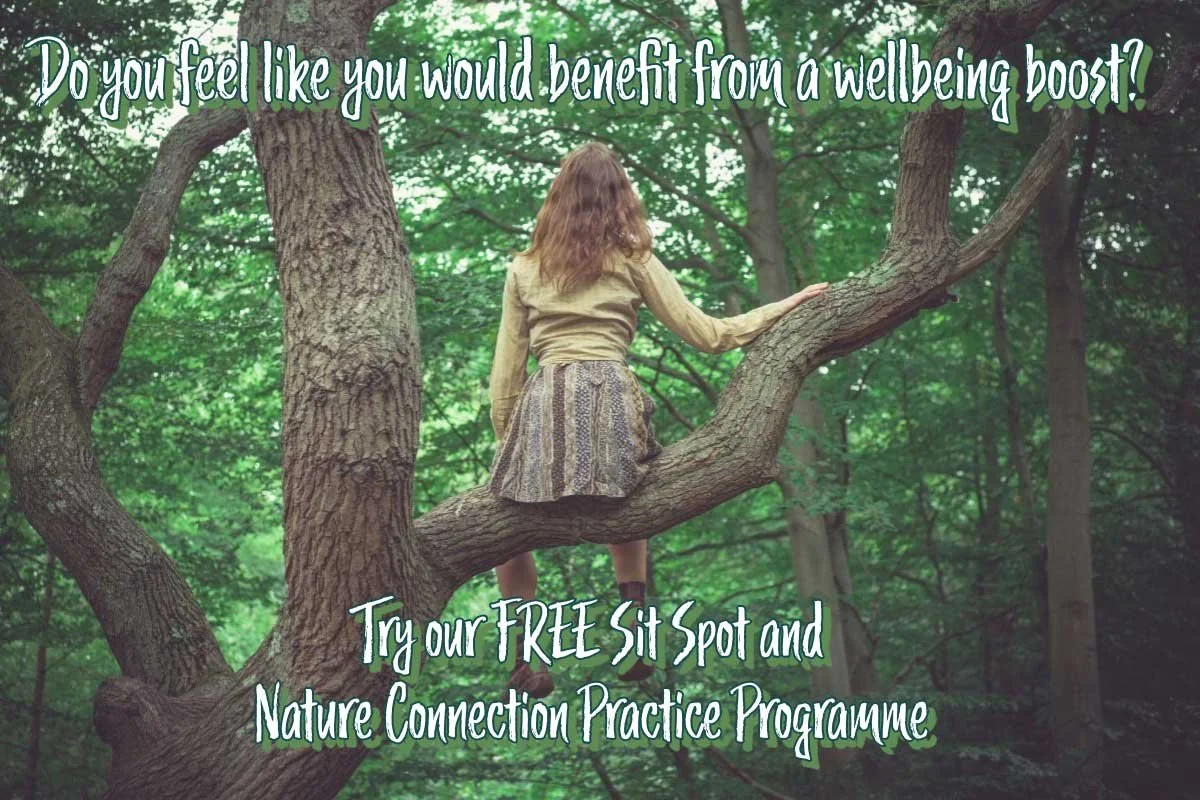
Most of us know what it feels like to instinctively seek out nature when life becomes difficult. After a stressful day, we might find ourselves drawn to a favourite woodland path. During times of grief or uncertainty, we may head towards the coast, climb a familiar hill, or simply sit beneath an old tree in a local park. Often, we cannot fully explain why. We simply know that something about being there helps. Our breathing slows. Our thoughts become less entangled. We begin to feel a little more like ourselves again.
For many years, researchers have explored the physical and psychological benefits of spending time in nature. Studies have shown that regular contact with the natural world can reduce stress, improve mood, lower blood pressure, support immune function, enhance creativity and increase our overall sense of wellbeing. More recently, scientists have begun asking an even more intriguing question: why does nature affect us so deeply?
One emerging answer comes from an unexpected place. It comes from Attachment Theory.
Developed by the British psychiatrist and psychoanalyst John Bowlby during the mid-twentieth century and later expanded through the pioneering research of psychologist Mary Ainsworth, attachment theory sought to explain one of the most fundamental aspects of being human: our need to form close, secure relationships. Bowlby recognised that the bonds formed between infants and their caregivers are not simply expressions of affection, but biological systems that help us survive, regulate our emotions and confidently explore the world. Ainsworth's observational research demonstrated that when children experience caregivers as consistently responsive and emotionally available, they develop what psychologists call secure attachment. Feeling safe allows them to venture out with curiosity, knowing they have a trusted place to return whenever they need comfort or reassurance.
For decades, attachment theory has been used to understand our relationships with parents, partners, friends and even pets. But a growing body of research suggests that perhaps these ideas can be extended further still. What if the natural world itself can become part of our attachment system? What if forests, rivers, mountains and coastlines can become places of emotional refuge — a secure base from which we can explore life and a safe haven to which we return when we feel overwhelmed?
This is not simply a poetic metaphor. It is an emerging area of psychological research. A fascinating recent study by Lindsay Branham, Embodied Earth Kinship: Interoceptive Awareness and Relational Attachment Personal Factors Predict Nature Connectedness in a Structural Model of Nature Connection, suggests that our relationship with nature may be shaped by many of the same psychological processes that underpin our closest human relationships. The research proposes that our ability to notice and understand the sensations arising within our own bodies — known as interoception — supports the development of a secure attachment to nature. In turn, this secure relationship appears to foster greater emotional wellbeing, a stronger sense of belonging within the living world, and an increased likelihood of engaging in behaviours that help protect and care for the environment.
These findings resonate deeply with what many people experience intuitively. The woodland that has quietly witnessed our joys and sorrows, the ancient Oak beneath which we have found moments of clarity, or the familiar stretch of coastline that seems to welcome us home each time we visit may become far more than beautiful places. Through repeated encounters, they can become trusted companions in our lives — places where our nervous system settles, our emotions become easier to navigate and our sense of connection quietly deepens.
In this article, we will explore how the pioneering work of John Bowlby and Mary Ainsworth helps us understand this emerging concept of secure attachment to nature. We will discover how emotional regulation, interoception and embodied awareness contribute to our relationship with the living world, and why feeling deeply connected to nature may naturally inspire us to become more caring stewards of the places we love.
Perhaps, in the end, nature is not simply somewhere we visit. Perhaps it is somewhere we belong. And perhaps, through returning again and again with openness and attention, we discover that the Earth has quietly been offering us the security, acceptance and companionship we have needed all along.
Secure Attachment to Nature: What Bowlby and Ainsworth Can Teach Us About Belonging to the Living World
When we speak about nature connection, we often mean mindfully connecting with the natural world around us. Yet the idea of a secure attachment to nature suggests something even deeper and more relational — not simply that we like nature and benefit from engaging with it, but that we can come to experience it as emotionally available, regulating, and trustworthy. Lindsay Branham's 2024 Frontiers article, Embodied earth kinship: interoceptive awareness and relational attachment personal factors predict nature connectedness in a structural model of nature connection, pushes this idea further by proposing that nature connection is not only cognitive or aesthetic, but also embodied and attachment-based. In that study, interoceptive awareness predicted nature connectedness, secure attachment to nature helped explain that relationship, and these processes were associated with wellbeing and pro-environmental behaviour.
That is a striking proposition, because Attachment Theory began in a very human setting. John Bowlby developed Attachment Theory to explain how infants manage proximity, safety, exploration, and distress in relation to their caregivers. Ainsworth later transformed those ideas into a more in-depth research framework through the Strange Situation Test, showing that attachment security could be observed in the way babies respond to separation and reunion. Taken together, their work offers a powerful lens for thinking about nature — perhaps the relationship between human beings and the natural world is not just one of use, admiration, or stewardship, but of attachment, care, and return.
Understanding Attachment
Before we can explore what it might mean to develop a secure attachment to nature, it is helpful to understand what psychologists mean by attachment in the first place. The word can sometimes sound rather clinical. In everyday language, we might talk about being fond of someone, feeling close to them, loving them, or feeling at home in their presence. Attachment Theory goes a little deeper. It describes one of the fundamental systems through which human beings seek safety, regulate distress and develop the confidence to explore the world around them. At the heart of Attachment Theory is a deceptively simple idea — We are more able to explore the world when we know we have somewhere safe to return to.
John Bowlby and the Attachment System
Bowlby became increasingly interested in the emotional consequences of separation between children and their parents during and after the Second World War. At the time, there was a tendency to regard children's relationships with caregivers primarily in terms of feeding and physical care. Bowlby believed something much more fundamental was taking place.
Children, he argued, have an innate need to form strong emotional bonds with particular caregivers. These bonds are not simply learned because a caregiver provides food or other rewards. Attachment is a biological and psychological system that has evolved to keep vulnerable young humans close to people capable of protecting them.
When a child feels frightened, threatened, ill or overwhelmed, the attachment system becomes activated. The child seeks proximity to their caregiver. A cry, a reaching hand, a frightened expression or the simple act of moving closer can all serve the same basic purpose: come closer, I need you. When the caregiver responds sensitively and reliably, the child's distress can begin to settle. This is important because the caregiver is doing more than solving an immediate problem. Through thousands of these small interactions, the child gradually learns something about the world:
When I am distressed, someone will come.
My feelings can be tolerated.
I can seek help when I need it.
The world is not entirely unpredictable.
I am worthy of care.
And, eventually:
I can go out and explore.
This is where Bowlby's concept of the secure base becomes so important.
The Secure Base
Imagine a young child playing in a garden. They wander towards a flower, investigate a stone, watch a bird or pick up a stick. They may move surprisingly far away from their parent, apparently absorbed in their own little world. Yet every so often they look back.
Where is Mum?
Where is Dad?
Are they still there?
If everything looks reassuring, the child carries on exploring. The parent does not need to follow them around or constantly reassure them. Their presence is enough. But if something frightening happens — a loud noise, an unfamiliar person, a fall or simply an overwhelming moment — the child's behaviour changes. Exploration stops. They return to the caregiver, seek comfort and regain their sense of safety. Once they are settled again, they may wander off once more.
This is the essence of the secure base.
A securely attached person does not need to remain permanently attached to their attachment figure. Quite the opposite. Security creates the freedom to explore. Bowlby's insight was therefore not simply that attachment provides comfort. Secure attachment provides the psychological foundation from which curiosity, independence and exploration can develop.
This has an interesting resonance with our relationship with nature.
Think about a place in the natural world that you know intimately. Perhaps it is a woodland you visit regularly, a particular beach, a riverbank, a hillside or even one old tree in a local park. When you first discovered it, it may simply have been somewhere pleasant to walk. But after visiting repeatedly, something can change.
You begin to recognise individual trees.
You notice where the bluebells appear each spring.
You know where the path becomes muddy after rain.
You recognise the sound of a particular stream.
You know how the landscape looks under Summer sunlight and Winter frost.
Eventually, you are no longer simply visiting somewhere. You are returning. And that distinction may be psychologically significant.
Mary Ainsworth and the Strange Situation
Bowlby's theories were enormously influential, but psychologist Mary Ainsworth played a crucial role in turning Attachment Theory into something that could be observed and studied.
In the 1960s, Ainsworth and her colleagues developed an ingenious research procedure known as the Strange Situation. The procedure involved observing young children, generally around one year old, as they experienced a series of brief separations and reunions with their caregiver in an unfamiliar room. The child was also exposed to the presence of a stranger. The researchers were not simply interested in whether the children became upset when their caregiver left — most young children do — what mattered was what happened when the caregiver returned.
Some children were clearly distressed by separation but were readily comforted when their caregiver returned. They sought contact, received reassurance and then returned to exploring their surroundings. Ainsworth described these children as securely attached. Other children appeared relatively indifferent to the caregiver's departure and avoided them on reunion. Others became extremely distressed and struggled to settle even when their caregiver returned. Ainsworth's work demonstrated something profound: children develop different expectations about relationships based upon their experiences of how caregivers respond to their needs.
The securely attached child has learned, through repeated experience, that seeking comfort is likely to work. That child can therefore devote more energy to exploration. The insecurely attached child may have learned something different. Perhaps seeking comfort has not always resulted in a reliable response. Perhaps the caregiver has sometimes been unavailable, inconsistent or frightening. In that situation, the child may need to devote more attention to managing the relationship itself. The attachment system can therefore influence how a person approaches the world, and this brings us to another important idea in Bowlby's work.

Internal Working Models
Bowlby proposed that our early experiences of attachment contribute to what he called Internal Working Models. These are essentially mental and emotional expectations about ourselves, other people and relationships. They are not conscious rulebooks. A child does not sit down and decide “I have observed that my caregiver responds consistently to my needs, therefore I shall develop a positive relational schema”.
Instead, these expectations become woven into the child's developing sense of how relationships work. Someone who repeatedly experiences responsive care may gradually develop an internal expectation that other people can be trusted, that their own needs are legitimate and that seeking support is safe. Someone who experiences inconsistency, rejection or frightening responses may develop very different expectations.
These internal working models can influence relationships throughout life. They can affect how easily we trust others, how we respond to intimacy, how we deal with separation and rejection, how we regulate difficult emotions and how confidently we explore unfamiliar situations.
Importantly, however, Attachment Theory does not mean that childhood experiences permanently determine who we become. Human beings remain capable of developing new relationships, new experiences and new understandings of themselves. Our internal working models can change, and perhaps this is one of the reasons the idea of attachment to nature is so interesting. If our relationship with the natural world can become emotionally meaningful, might repeated experiences of safety, familiarity and belonging in nature contribute to our wider capacity for emotional regulation and connection? The emerging research suggests that this possibility deserves much more attention.
The Safe Haven
The secure base represents one side of attachment. The other is the ‘safe haven’. When we are frightened, overwhelmed or emotionally exhausted, we instinctively seek somewhere — or someone — that helps us feel safe again. The safe haven is the place we return to when exploration becomes too much. This distinction between secure base and safe haven is useful because it helps explain why attachment is not simply about comfort. A secure attachment provides both:
“I can go out into the world” and “I can come back when I need to”.
The two functions work together. Without the secure base, exploration can feel too risky. Without the safe haven, exploration can become exhausting because there is nowhere to recover. Human relationships can provide both functions. A loving partner, trusted friend, supportive parent or compassionate community can become somewhere we turn when life becomes difficult, while simultaneously giving us confidence to engage with life beyond the relationship. And increasingly, researchers are asking whether nature can provide some of these same psychological functions, and many people will tell you that they have experienced this intuitively.
We go for a walk because our thoughts are racing.
We sit beside the sea because we are grieving.
We find ourselves drawn towards the woods when we are overwhelmed.
We return to the same hill when life feels uncertain.
We sit beneath a familiar tree and somehow feel that we can breathe again.
The landscape has not solved the problem. The tree has not given us advice. The river has not told us that everything will be all right.
And yet something has changed.
Our bodies may have softened.
Our breathing may have slowed.
Our attention may have widened.
The intensity of our emotions may have become more manageable. We may feel sufficiently regulated to begin thinking about what comes next.
This is where Attachment Theory begins to offer an intriguing new way of understanding nature connection.
Perhaps our favourite places in nature can become safe havens.
Perhaps, through repeated positive experiences, they can also become secure bases.
Not in exactly the same way as a human caregiver, and certainly not as a replacement for human relationships, but as another source of familiarity, regulation, belonging and emotional support.
From Attachment to Nature Connection
This is what is explored by Lindsay Branham's research into what she describes as Embodied Earth Kinship. Rather than viewing nature connection simply as an appreciation of beautiful landscapes or an intellectual understanding of ecology, Branham explores the relationship between nature connectedness, interoceptive awareness and attachment. Her work suggests that the relationship we develop with the natural world is profoundly embodied: it involves how we notice our internal bodily states, how we experience emotion, how we regulate ourselves and how safe and connected we feel within the more-than-human world.
This gives us an important bridge between Bowlby's Attachment Theory and contemporary research into nature connection. Attachment is fundamentally about relationships, and relationships are something we experience not only through thoughts, but through the body. When we feel safe with another person, our body often knows before our conscious mind catches up.
Our shoulders drop.
Our breathing changes.
Our face softens.
We become more curious.
We become less defensive.
Something similar may happen when we develop a deep and familiar relationship with a place in nature.
The woodland becomes somewhere our body recognises.
The path becomes familiar.
The sounds become reassuring.
The changing seasons become part of an ongoing relationship.
And eventually, simply arriving there may begin to signal: You are safe here.
That possibility takes us beyond the idea that spending time in nature is merely a pleasant way of escaping everyday life. It suggests that, through repeated and emotionally meaningful encounters, we may develop a relationship with the natural world that helps us regulate ourselves, explore more confidently, recover from stress and experience a deeper sense of belonging. And if that relationship becomes secure, something else may happen too. We may begin to care more deeply for the places that care for us.
The woodland that has helped us through difficult times becomes something we want to protect.
The river that has brought us peace becomes more than a body of water.
The old tree becomes more than timber.
‘Nature’ becomes a relationship with something, and when we experience something as a relationship rather than a resource, our behaviour towards it can begin to change. This is where the psychology of attachment meets the emerging science of nature connectedness — and where a secure attachment to nature may have implications not only for our own emotional wellbeing, but for the wellbeing of the living world itself.
Can We Become Securely Attached to Nature?
The idea that we might become attached to nature can initially sound a little strange. We understand being attached to a person. We can become deeply attached to a beloved dog or cat. We can even become attached to a house where we have lived for many years, or to a particular town that has shaped our lives.
But can we really become securely attached to nature?
Can a woodland become a safe place?
Can a landscape become part of our emotional world?
Can a relationship with the living Earth influence the way we regulate ourselves, experience belonging and move through the world?
Increasingly, researchers are suggesting that the answer may be yes — although perhaps not in quite the way we might first imagine. The important distinction is that attachment to nature does not mean that trees, rivers or mountains literally replace the human relationships upon which Attachment Theory was originally based. Nor does it suggest that someone who has experienced difficult or insecure human relationships can simply go for a walk in the woods and somehow resolve them. Human attachment relationships remain profoundly important. Instead, the emerging idea is rather more interesting.
Nature may become an additional source of attachment, belonging and emotional regulation within our lives.
It can become another relationship through which we experience familiarity, safety, comfort, curiosity and connection, and perhaps the first step towards understanding this is to look at the different ways in which we become attached to the places we inhabit.
Attachment to Places
Most of us have places that mean something to us. Perhaps it is the house where we grew up, a childhood garden, a favourite beach, a particular stretch of woodland or the hill we climbed every Summer as a child. Sometimes the place itself is not especially remarkable. It may not appear on tourist maps. It may not be considered particularly beautiful. But to us, it matters.
We know it.
We remember it.
We have stories associated with it.
We recognise how it smells after rain and how the light falls across it at a particular time of year. We know where the path becomes muddy, where the blackberries grow and where we can sit undisturbed. The place has become woven into our autobiographical memory.
Psychologists and environmental researchers have explored this phenomenon through concepts such as Place Attachment — the emotional bond between people and particular places. Place attachment can develop through repeated experiences, memories, social relationships and a sense of identity. A place can become part of the story we tell about ourselves. Think about the phrase:
“This is where I used to come when things were difficult.”
That sentence contains much more than geography. It tells us that the place has acquired emotional significance. Perhaps the person who used to walk there during a difficult period has changed since then. Perhaps their circumstances are completely different. Yet returning to the place can bring back something familiar — a sense of continuity between who they were and who they have become.
In this way, places can become emotional anchors, and this is where Place Attachment begins to overlap with the language of Attachment Theory. A place to which we feel securely attached can become somewhere we return to when we need to feel grounded. It can offer familiarity during periods of uncertainty and continuity during periods of change. It becomes somewhere we know we can go.

Attachment to Landscapes
Place Attachment can become even more expansive when we begin to think about landscapes. A single place might be a particular woodland clearing or favourite tree, but a landscape can encompass something much larger. It might be the Cairngorm mountains, the coastline of the Hebrides, the rolling hills of the Borders, a familiar river valley or the landscape surrounding the village where we grew up. Landscape attachment can be deeply emotional because landscapes provide a sense of context and belonging. They are the places within which our lives unfold.
We do not simply observe them.
We move through them.
We experience weather within them.
We watch them change through the seasons.
We remember ourselves at different ages within them.
A landscape can therefore become part of our identity. There is a particular feeling that can arise when we return to a familiar landscape after being away for a long time. Perhaps we see the first outline of the hills from the road. Perhaps the sea suddenly appears between buildings. Perhaps we recognise the distinctive shape of a mountain. Something inside us may shift.
“I'm home”.
That response is interesting because home is not simply a building. Home is fundamentally a feeling of belonging. A landscape can become part of that feeling. This may help explain why people who move away from places they love sometimes experience something resembling grief. They have not simply lost a view. They have lost an environment that helped organise their memories, identity and sense of belonging. And when people return, even decades later, the landscape can sometimes feel strangely familiar. The hills have not necessarily changed, but neither have we remained the same, and in this way the landscape provides a thread of continuity through our changing lives.
From Place Attachment to Attachment to the Living World
And there is another step we can take. What happens when our relationship with nature moves beyond attachment to a particular place? What happens when we begin to feel connected not simply to this woodland, that mountain or our favourite beach, but to the living systems of which those places are part? This is where the idea of attachment to the living world becomes particularly important.
Imagine someone who has spent years walking through the same woodland. At first, they might simply enjoy being there.
Then they begin to notice individual trees.
They learn which birds live there.
They see the same fungi appearing each Autumn.
They watch the bluebells emerge in spring.
They notice how fallen trees become habitats for insects and fungi.
They begin to recognise the changing character of the woodland through the seasons.
Eventually, the woodland stops feeling like a collection of separate objects. It becomes a living community. The trees, birds, insects, fungi, soil, water, weather and people become interconnected and the person begins to experience themselves as within nature rather than standing outside it. This is close to what Lindsay Branham explores in her 2024 research into what she calls Embodied Earth Kinship. Her study examines the relationships between interoceptive awareness, relational attachment, nature connectedness, wellbeing and pro-environmental behaviour. Rather than treating nature connection simply as an intellectual belief that nature is important, Branham explores it as something relational and embodied — something that is experienced through the body and through our emotional relationship with the more-than-human world.
One particularly interesting element of the study is its consideration of secure attachment to nature. Branham's model suggests that secure attachment to nature is associated with nature connectedness and that this relationship is linked with wellbeing and pro-environmental behaviour. In other words, feeling securely connected with the natural world may have consequences that extend beyond simply enjoying our time outdoors. It may influence both how we feel and how we behave towards the environment.
This is an important shift in perspective. Nature connection is often discussed as though it were something we can acquire through information.
Learn the names of the birds.
Identify the trees.
Understand the importance of biodiversity.
Read about climate change.
All of these things can be valuable. But knowledge alone does not necessarily create relationship. We can know an enormous amount about something without feeling that we belong to it.
Attachment is different. Attachment involves emotional significance.
It involves familiarity.
It involves returning.
It involves caring about what happens to the other.
And this may be one of the reasons that emotionally meaningful encounters with nature can be so powerful.
Nature as an ‘Additional Attachment Figure’
This brings us to an important distinction. It would be misleading to suggest that nature simply replaces human attachment figures. A forest cannot hold us in quite the same way that a loving parent, partner or friend can. It cannot have a conversation with us, respond intentionally to our needs or offer the conscious empathy of another human being. And we should be cautious about making grand claims that nature can heal every wound created within human relationships.
Nature is not a replacement for people.
But it may become something else — an additional attachment figure within the wider network of relationships that support our lives.
This idea allows us to hold two truths at the same time.
Human beings need human beings.
And human beings also need the living world.
We are not separate from nature and then occasionally visit it for recreation. We are biological creatures embedded within ecosystems. Our bodies depend upon air, water, food, sunlight, microorganisms, plants and countless other forms of life. Our relationship with nature is therefore not entirely optional. What is optional is whether we experience that relationship consciously. A person might live in a city, rarely visit the countryside and think of nature as something “out there”. Another person might walk beneath street trees every morning, notice the changing seasons, watch swifts returning each summer and have a favourite patch of woodland where they regularly go to think.
Both people are biologically part of nature.
But their felt relationship with the living world may be profoundly different. The second person may have developed something resembling a secure relational bond with nature.
When life becomes difficult, they know where they can go.
When they need perspective, they have somewhere to walk.
When they feel disconnected from themselves, the natural world can help them reconnect with their senses.
And when they see a familiar tree damaged or a favourite habitat threatened, they may feel genuine concern, and that final point is particularly important — attachment creates a reason to care.

The Emotional Importance of Returning
Secure attachment is built through repeated experiences. A child does not develop security because their caregiver provides one wonderful afternoon. Security develops through hundreds and thousands of ordinary interactions.
The parent comes when they cry.
The parent welcomes them when they return.
The parent remains present when they explore.
Over time, the child's nervous system learns “I can trust this relationship”. Something analogous may happen through repeated encounters with nature.
We return to the same woodland.
The seasons change.
The woodland remains.
We arrive anxious.
We leave calmer.
We return grieving.
We find ourselves able to breathe.
We come when life is confusing.
We walk until something becomes clearer.
The next time we feel overwhelmed, our body remembers that “This is somewhere I can go”. That expectation may be one of the beginnings of secure attachment to nature. It is not necessarily conscious. We might never think “I am now forming an attachment relationship with this woodland”. Instead, we simply find ourselves returning. Again. And again. And again.
From Refuge to Resilience
There is another important implication. If nature becomes one of our reliable sources of emotional regulation, then our relationship with it may contribute to resilience. Resilience does not mean becoming immune to stress. It does not mean being permanently calm or bouncing back instantly from adversity. A more realistic understanding of resilience is the capacity to encounter difficulty, adapt, recover and continue. Secure relationships can support this process by providing somewhere to return to when life becomes overwhelming.
Nature may become one additional resource within that wider network — perhaps we go into the woods after an argument and return with enough perspective to have a more constructive conversation. Perhaps we walk beside the sea while grieving and discover that we can tolerate the sadness for another few minutes. Perhaps we spend an hour on a hillside after a difficult week and return home with our thoughts slightly less tangled.
These are small things.
But resilience is often built from small things. Repeated experiences of being able to regulate, recover and return to life can gradually change our expectations of ourselves.
“I can get through difficult moments.”
“I know what helps me.”
“I have somewhere to go.”
“I can return.”
Nature does not have to rescue us for it to become part of our resilience. Sometimes it simply needs to provide the space in which we can remember that we have resources of our own.
From Resilience to Relationship
There is an important difference between using nature and relating to nature. We might use a forest as a convenient place to exercise. We might use a park to escape traffic. We might use a beach to relax on holiday. There is nothing inherently wrong with any of this. But attachment asks us to go a little deeper.
What happens when we begin to recognise the forest as a community of living beings?
What happens when we begin to notice that the trees we rely upon for shade, beauty and tranquillity are themselves living organisms participating in a complex ecosystem?
What happens when our relationship becomes reciprocal?
We receive something from the place … and we begin to feel an increasing desire to give something back.
Perhaps we pick up litter.
Perhaps we support habitat restoration.
Perhaps we plant native species.
Perhaps we simply become more careful about how we move through the landscape.
Perhaps we start paying attention to the creatures whose home we are visiting.
The relationship has changed. Nature is no longer simply providing a service to us. We are beginning to care for something we have come to love. This is one of the most exciting implications of Branham's work. Her research suggests that secure attachment to nature is associated not only with wellbeing but also with pro-environmental behaviour. The implication is that the emotional bond itself may become part of the motivation for environmental care. That gives us a different way of thinking about conservation. Perhaps the question is not only “How can we persuade people to care about the environment?” Perhaps we should also ask “How can we help people develop relationships with the living world that they genuinely want to protect?”
That is a very different proposition. It moves us away from environmental responsibility based entirely upon guilt, fear or obligation. Instead, it suggests that care can grow naturally from connection. We protect what we love. We look after what we feel belongs to us — and what we feel that we belong to. And perhaps, most importantly, we are much more likely to protect something when we no longer experience it as something separate from ourselves.
This is where secure attachment to nature begins to become more than an interesting psychological concept. It becomes a way of understanding belonging.
We may begin with a favourite tree.
Then a woodland.
Then a landscape.
And eventually, perhaps, the living world itself.
The circle of attachment grows wider. And as it does, the question subtly changes. Instead of asking “What can nature do for me?” we may begin to ask “How can I be in a good relationship with the living world of which I am already a part?” and that may be the beginning of something much deeper than nature appreciation. It may be the beginning of Earth Kinship.
Nature as a Secure Base
One of the most beautiful ideas to emerge from Bowlby's attachment theory is that security and exploration are not opposites. In fact, they depend upon one another.
A securely attached child does not remain permanently beside their caregiver. Once they feel safe, they move away. They investigate the world, play, experiment, become curious and gradually develop their independence. The caregiver provides the confidence to go, and the knowledge that they can return provides the confidence to come back. Bowlby called this a secure base. The idea is wonderfully simple: when we know that there is somewhere safe to return to, we can venture further into the world.
As adults, we may no longer need a parent standing nearby while we explore. But we continue to need secure bases in different forms. A trusted relationship, a familiar home, a close friendship, a community or a place where we feel comfortable can all provide some sense of emotional grounding, and for many people, nature can become part of this network of secure places.
Somewhere To Come Back To
Think about a favourite natural place. It doesn't need to be spectacular. Perhaps it is a small woodland near your home. Perhaps there is a particular bench overlooking a river, a stretch of beach you know well, a hill that you climb regularly or an old tree in the corner of a local park. What makes it special may have very little to do with its appearance.
You know it.
You have been there in sunshine and rain.
You have walked there when you were happy and when you were struggling.
You have watched the seasons change.
Perhaps you have stood beneath the same branches while your life was changing around you. Over time, something subtle can happen. The place begins to acquire emotional familiarity.
You don't have to work out whether it will feel comfortable — you already know.
You don't have to decide whether you belong there — you simply arrive.
And perhaps your body begins to respond before your conscious mind does.
Your shoulders drop.
Your breathing becomes easier.
Your attention widens.
You notice birdsong that you might have ignored elsewhere.
You become aware of the texture of bark beneath your fingertips or the movement of leaves overhead.
The place has become a kind of emotional landmark. You know where you can go when life feels too complicated. This is one of the ways in which a relationship with nature may begin to resemble the function of a secure base. It gives us somewhere from which to meet the world and somewhere to return when we need to recover.
A Secure Base Doesn't Keep Us Safe From Everything
It is important not to misunderstand the idea of a secure base. Security does not mean that nothing frightening, difficult or painful will ever happen.
A securely attached child will still fall over.
They will still encounter strangers.
They will still become frustrated, frightened, disappointed and angry.
The secure base doesn't remove those experiences, instead, it provides enough confidence and emotional safety for the child to meet them.
And the same may be true of our relationship with nature.
A woodland walk cannot make grief disappear.
A mountain cannot solve a relationship problem.
A river cannot remove anxiety.
Nature does not need to provide those things in order to be valuable. Sometimes what we need is not for the difficult emotion to disappear, but for our relationship with it to change.
We need enough space to feel what we are feeling without being completely overwhelmed by it.
We need to be able to breathe.
We need to regain perspective.
We need somewhere to put down, temporarily, the weight we have been carrying.
Nature can provide that space, and once we are more regulated, we may find that we are better able to return to the problem itself. This is an important distinction — Nature does not necessarily remove the challenges of life. It can help us become more resourced to face them.
Final Thoughts
Attachment theory began as a way of understanding the bonds between children and caregivers. More than half a century later, its insights continue to reverberate through psychology — not only helping us understand our relationships with one another, but also beginning to illuminate the deep and reciprocal bonds we can form with the living world.
For Iona's counselling practice — and particularly for anyone drawn to outdoor, walk-and-talk sessions in Glasgow's parks — the concept of secure attachment to nature offers a hopeful framework. It validates what many people already know intuitively: that returning again and again to a familiar, well-loved place is not a waste of time or merely a recreational activity. It can be a profoundly therapeutic act. A familiar woodland, a well-worn path, or a single ancient oak can become a quiet companion in the work of healing, regulation, and self-discovery.
Walk-and-talk therapy draws upon these forces directly. The shared movement, the rhythm of walking, the open sky, the changing seasons — all can soften the intensity of therapeutic conversation while inviting a deeper, more embodied form of reflection. Nature does not replace the therapeutic relationship, but it can become a co-regulating third presence, offering something that four walls sometimes cannot.